Washington Monument Projection Mapping
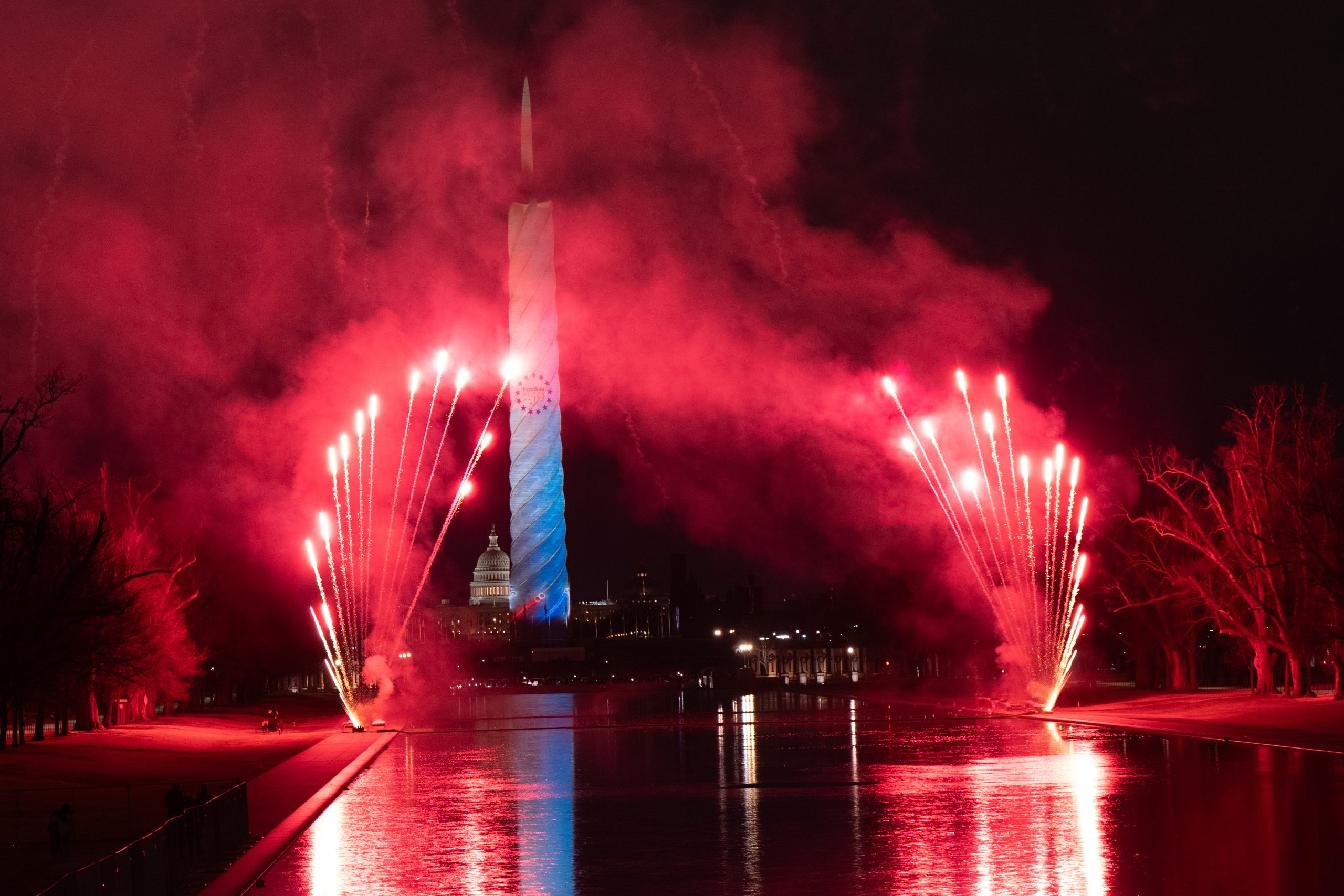
DCE Productions approached me to help create a 25-minute animated story of America, projection mapped across all four sides of the Washington Monument for New Year’s Eve. From kickoff to delivery, the timeline was two and a half weeks — a demanding schedule that required the entire team to push hard and work with maximum resource. The client’s budget supported that commitment.
Concept work and storyboards were shared before production began, but the team was encouraged to bring creative suggestions throughout — something I took full advantage of.
The Technical Foundation
The shape of the Washington Monument presented an immediate challenge. With projections spanning all four faces, every animation had to read as seamless from any angle. To solve this, we reverse-engineered the monument’s geometry into a production template that the animation team could design and test against throughout the process. This was integrated into a visual mock-up, giving the whole team a reliable way to preview how content would sit on the surface.
The full 25-minute piece was divided into five acts. Each team member selected sections suited to their skillset. I took on all of Act 2, the rocket launch sequence in Act 3, and contributed to parts of Act 5 — work that drew on compositing, 3D, and 2D animation across the board.
Act 2 - Lewis and Clark Expedition
Lewis and Clark Sequence
Storyboard
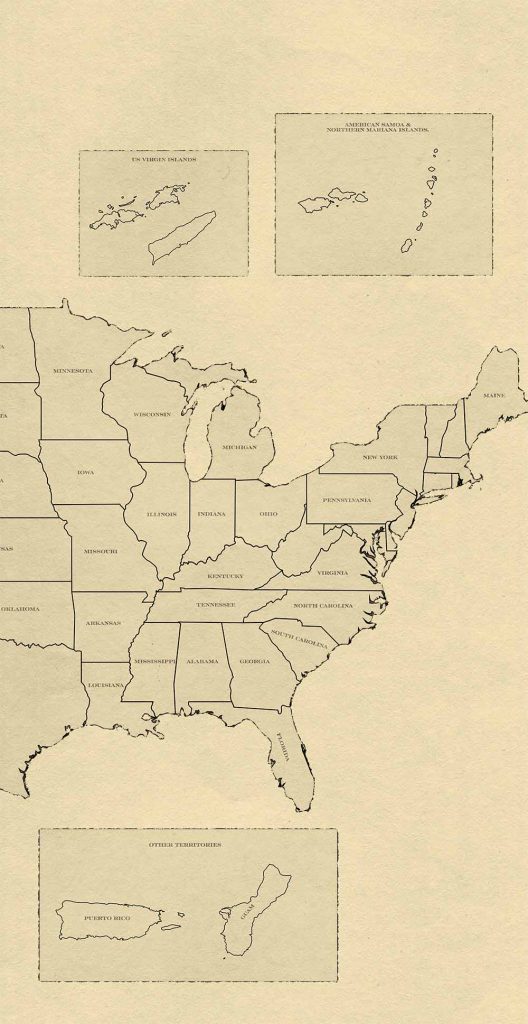
Act 2 tells the story of the Lewis and Clark Expedition through animated maps, tracing the journey from its starting point to its end. I began with research, diving into period-accurate references to ground the aesthetic in something real. The Internet Archive proved invaluable — a rich source of original maps and historical documentation from the era. I also referenced a PDF of The Journals of Lewis and Clark as a narrative guide during production.
Before touching animation, I focused entirely on look and feel. Approaching the design in stages kept the process agile and left room for creative exploration. I experimented with layered textures — scratches, burns, and embossed paper effects — blended together using different blending modes to give the map a physical, tactile quality that felt genuinely period-appropriate.
Before
After
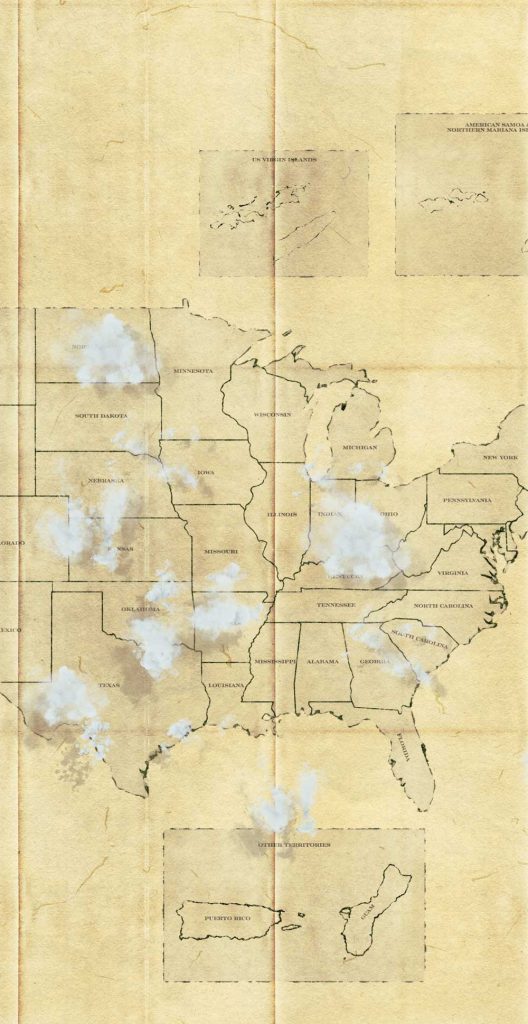
With the map itself reading well, I moved on to illustrations — adding visual moments at iconic points along the expedition’s route. These were a mix of original designs and sourced stock, animated in sync with the narration and carefully blended into the overall aesthetic to keep the map’s tactile quality intact.
One of the stronger creative suggestions to come out of daily reviews was to animate the severe storms Lewis and Clark encountered during the journey. I built a cloud composition and blended in stock lightning footage, animating the cloud colour to shift and darken as the storm hit — a small detail that added real dramatic weight to that section.
Act 2 is broken into five sections, two of which are transition points that zoom into the map at key moments in the expedition. I worked closely with teammates handling adjacent sections to ensure these transitions felt seamless. The final approach — a zoom that dissolved like watercolour paint — kept the motion and visuals firmly within the same creative world.
The first pass of animation revealed a problem: the lines and shapes looked flat against the map surface. To fix this, I worked on making the graphical elements behave like ink bleeding into aged paper, blending them into the texture and softening edges with targeted blurs. The result felt much more organic and believable.
Act 3 Rocket Launch
Rocket Sequence
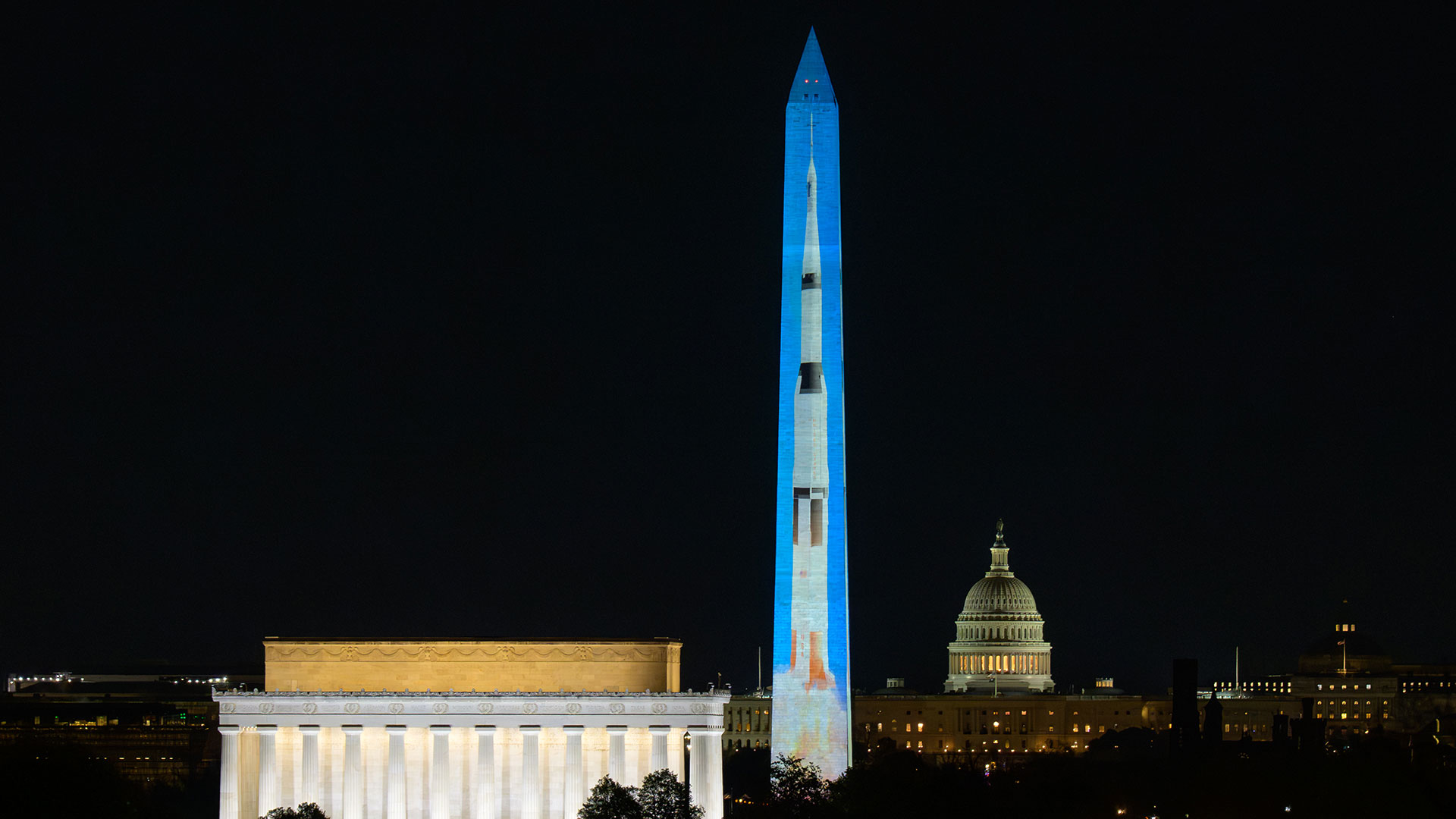
Act 3 covers America’s moon landing, from launch to touchdown. My contribution was the Saturn V launch sequence. The team had sourced VDB smoke simulations and a 3D rocket model to work from, but early tests made one thing clear: attempting to produce the whole shot in 3D would burn too much time. The heavy lifting needed to happen in After Effects.
Compositing in After Effects
Previz
Working at the monument’s resolution added another layer of complexity — the larger the canvas, the longer every 3D render takes, and smoke and fire simulations are especially compute-heavy. My approach was to render multiple passes of the smoke at low-to-medium quality and layer them in After Effects, using contrast, brightness, and opacity adjustments on each layer to build depth and dimension. A cloud render service ran in parallel with my local machine, letting me composite the shot while offloading the rendering workload.
I used Saturn V launch footage as close reference throughout, studying the details carefully to get the nuances right. Dry ice effects, embers, fire particles, and animated reflections were all composited in After Effects — elements that added a level of realism that 3D alone couldn’t have achieved on this timeline.
Act 5 Countdown
Storyboard
The final act was the most creatively abstract of the show, requiring extensive R&D, iteration, and creative problem solving. Act V centered on the New Year’s Eve countdown celebrating America’s 250th anniversary.
When being briefed, the client requested that a candle be the final visual after the countdown animation. The challenge was to create a visually compelling countdown that could seamlessly transition into a flickering candle projected onto the Washington Monument. Several members of the team, including me, worked up visual concepts for the candle and countdown animation. The original storyboard visualized groups of orbs with glowing tails travelling up the monument to reveal the candle as the countdown hit zero.
Look Development
I built out static visuals and rough animation tests of the orbs moving up the monument in Cinema 4D, exploring both a controlled Mograph system and a dynamic particle system. The controlled Mograph system proved easier to manage and render. A countdown was also built in Cinema 4D using simple xPresso — keeping the countdown in 3D meant the glow from the orbs could be reflected on the numbers. The R&D was well received by the client, but the challenge of transitioning the animation into the candle reveal still remained.
Look Development
As we got closer to New Year’s Eve, a new client request introduced an additional creative challenge. The orbs needed to collect at the top of the monument for several minutes before the countdown began. With the deadline fast approaching, this required a different approach to keeping the whole animation in 3D. We tested a few executions eight hours before the deadline, but none aligned with the client’s vision.
Because so much research and development had gone into this act from the beginning of the project, we had built up a vast library of assets. The team and I pivoted to combine and reference that library of look development — lighting references, texture studies, and render tests — and re-created the sequence in After Effects. This allowed us to animate the glowing spheres collecting at the top of the monument in tandem with the moving orbs, and to art direct and stitch everything together more quickly than if we had kept it all in 3D. The animated candle was then composited into the shot after the countdown finished, bringing Act V to a close and marking 250 years of America on the face of the Washington Monument.
Act V
Outcome
The projection mapping show on the Washington Monument, launching the “Freedom 250” celebration for America’s 250th birthday, was a massive success, captivating thousands in person and generating significant buzz on social media. The event, which ran from New Year’s Eve 2025 through January 5, 2026, was the first time all four sides of the monument were illuminated with a 25-minute, high-tech story of American history
Instagram feed
It gained traction across major news outlets across America.
NPR reported on the event, providing a 6-minute audio segment discussing the content.
NBC Washington covered the last night of the show on January 5, featuring interviews about the historical content.
Washington Post noted that the projections were authorized by Congress (Nov. 20, 2025) and signed into law by the president on Dec. 2, 2025.
NBC News highlighted the themes of national discovery, expansion, and future possibilities displayed on the monument.
Interview with Producer and Director of the team
Happy New Year, America! Tonight’s @250_freedom projection on the Washington Monument was truly inspiring...from the Apollo pioneers who first walked the Moon to the Artemis generation carrying the torch in 2026. Grateful for the incredible legacy we’re building upon, and fired up for American leadership in the next Golden Age of science and discovery.
NASA Administrator Jared Isaacman