Miwadi — Dynamo Agency
Dynamo Agency brought me on board to work with one of Ireland’s most iconic drink brands, Miwadi. It marked the first time Miwadi had leaned heavily into animation and motion design as part of a campaign.
Dynamo reached out several weeks before production began to plan resource and budget. Having already developed work-in-progress storyboards and key art, they gave me everything I needed to provide accurate timelines and milestones. That level of early planning also allowed me to build in flexibility for the inevitable unknowns — client feedback cycles being the most significant.
In food and drink campaigns, key art typically serves as the visual anchor across all touchpoints. Dynamo had developed a strong print campaign, and that key art would be closely referenced throughout production — particularly in the hero section of each video, where visual alignment with the print work was essential for brand consistency and recognition.
We were tasked with producing three videos, each designed to feel playful, energetic and youthful, promoting two new Miwadi flavours.
Process
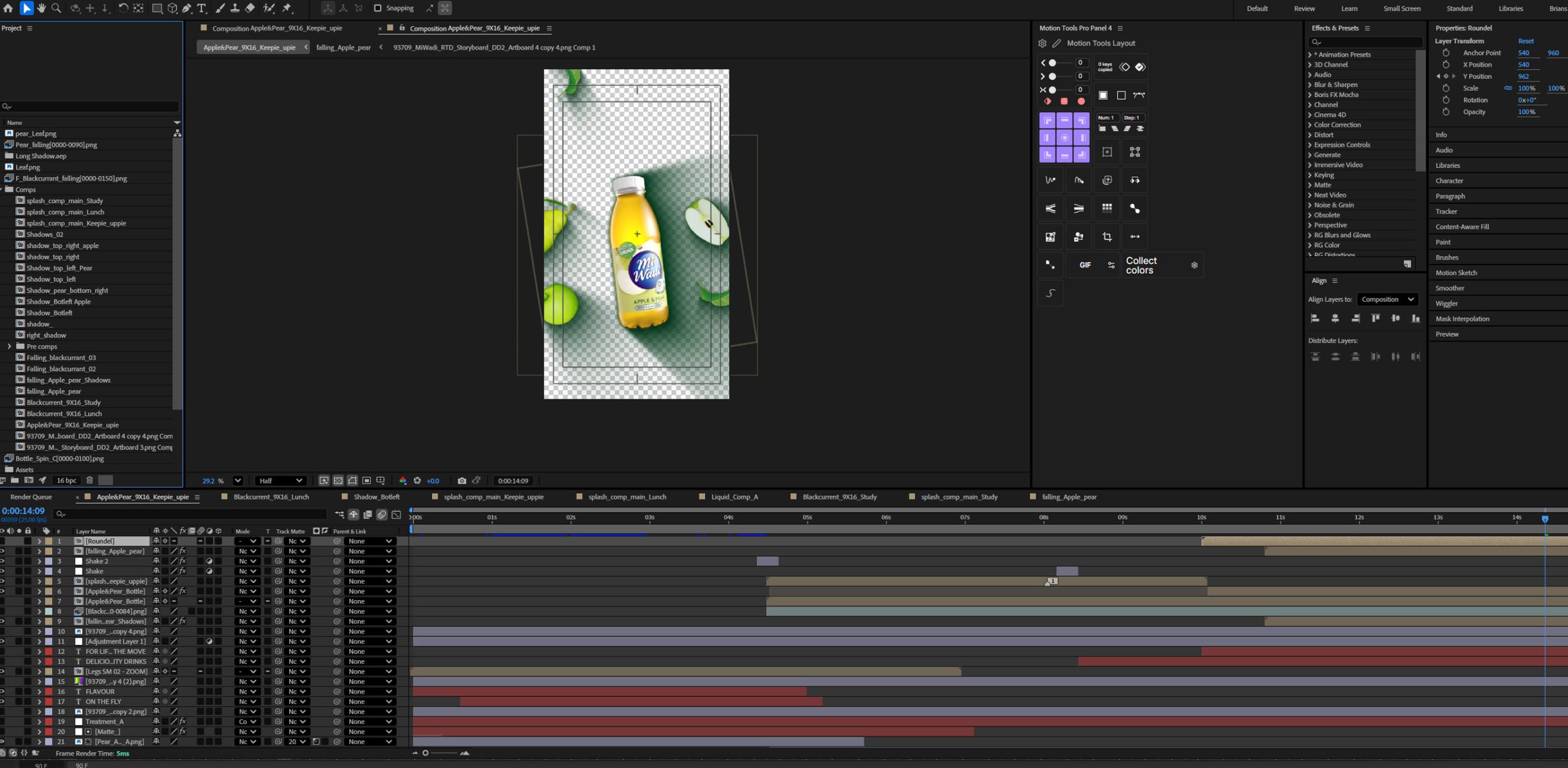
The creative direction called for a mixed media, stop-motion aesthetic — a world where 2D and 3D elements coexisted. To manage this, I built a flexible compositing system in After Effects that allowed individual elements to be swapped and iterated quickly.
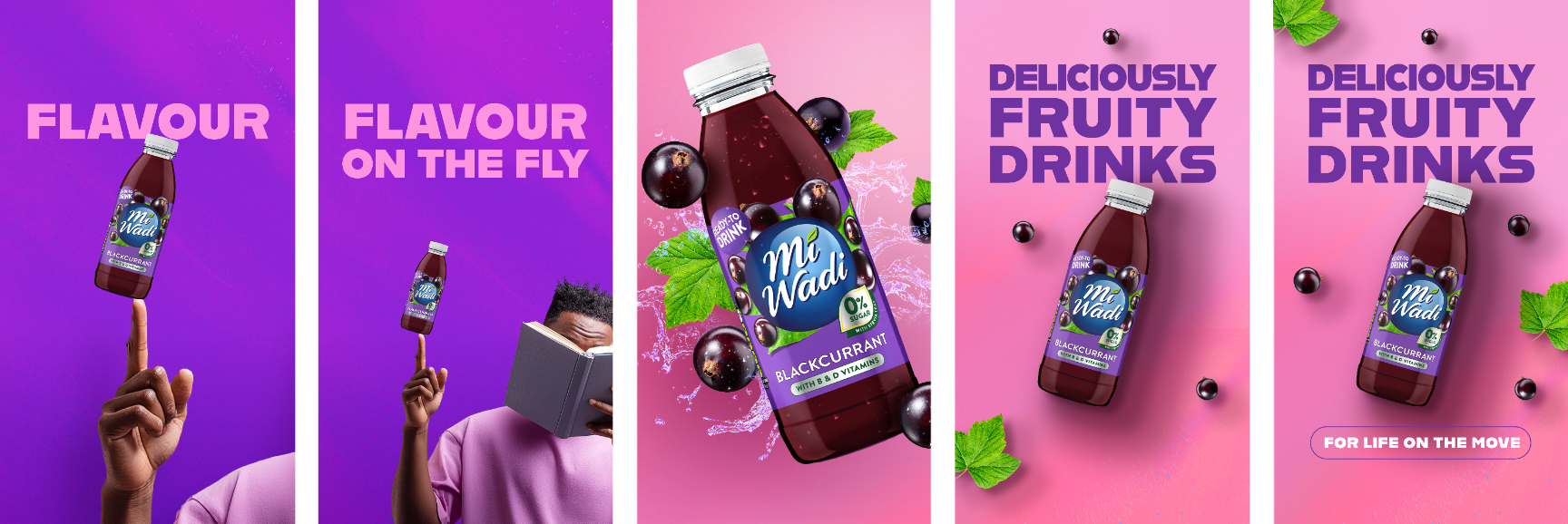
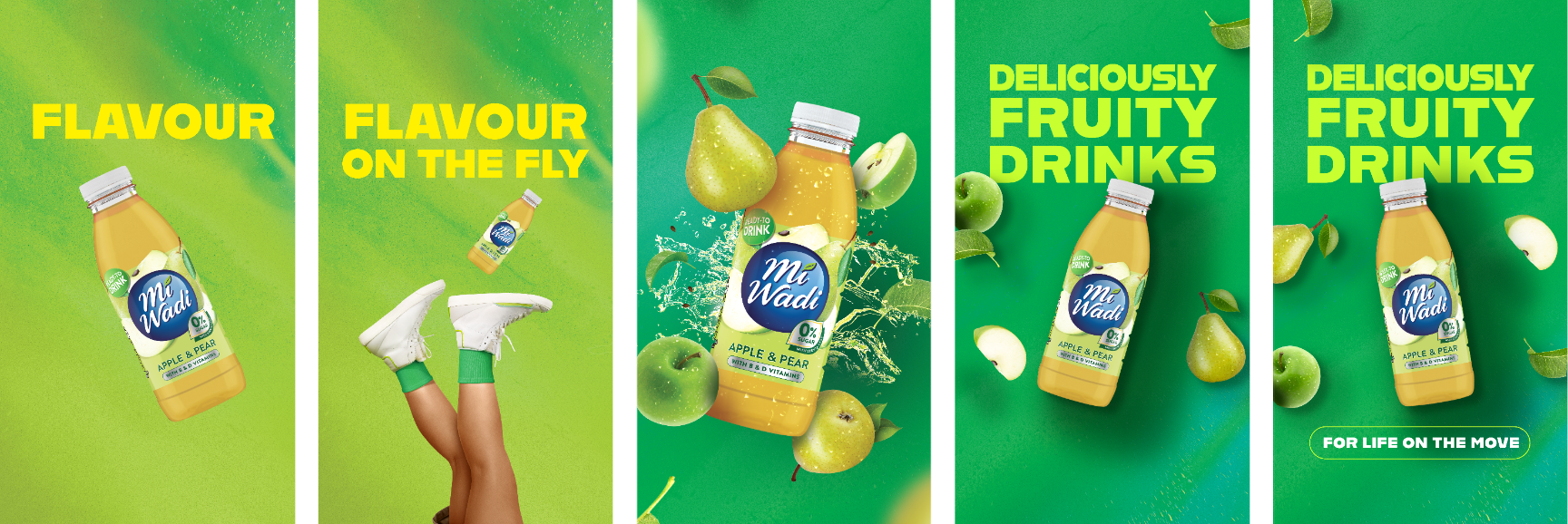
I started by blocking out each video into static sections, breaking every piece into three parts: Intro → Hero → CTA. This gave me a clear structural framework and allowed me to iterate on timing early without committing to fully animated sequences.
The bulk of the creative work lived in After Effects — animating text, compositing subject matter, and layering in visual texture. The stop-motion feel was achieved by working backwards: each element was first animated smoothly, then effects were applied on top to introduce jitter and tactility, as though the pieces had been cut from paper. Where animation still felt too fluid, keyframes were sharpened and made more abrupt. Stacking native After Effects effects in different combinations helped me dial in the final look, while keeping all 2D and 3D elements feeling like they belonged to the same world.
Storyboards
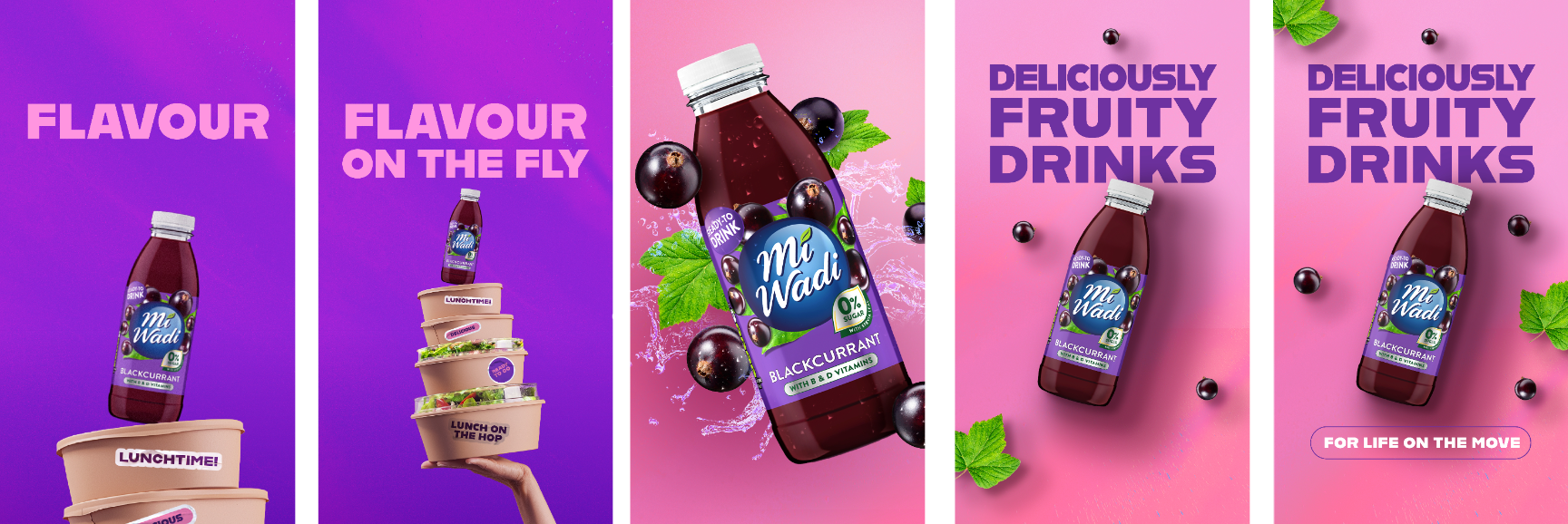
2D elements
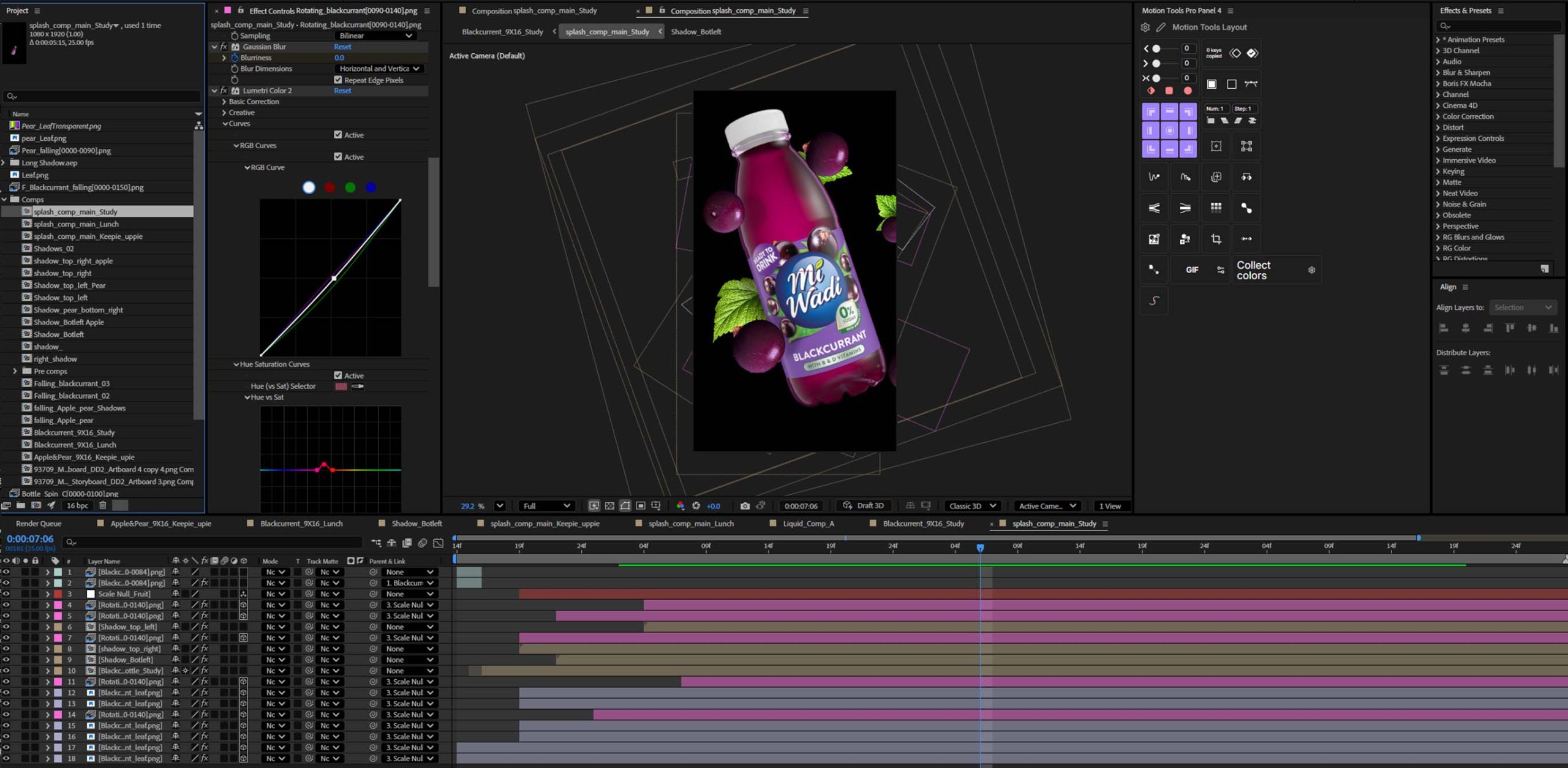
Early in production I focused on elements that could be quickly turned around for feedback sessions with Dynamo. Their direction was for the text to animate with energy, without becoming a distraction. I animated tracking, scale and position in a jittery style to create the impression of letters being placed one by one.
The human elements needed to feel characterful and harmonise with the Miwadi bottle. For the apple and pear executions, I used the Puppet Tool to animate the legs — separating them with masking and using generative AI to fill in missing areas. Each joint was pinned and animated in tandem with the bottle, with careful attention paid to position, stretch and compression to avoid distortion. I suggested a slight reframe to Dynamo to keep any distorted edges out of shot — an adjustment we carried across all three executions to maintain visual fidelity.
3D elements
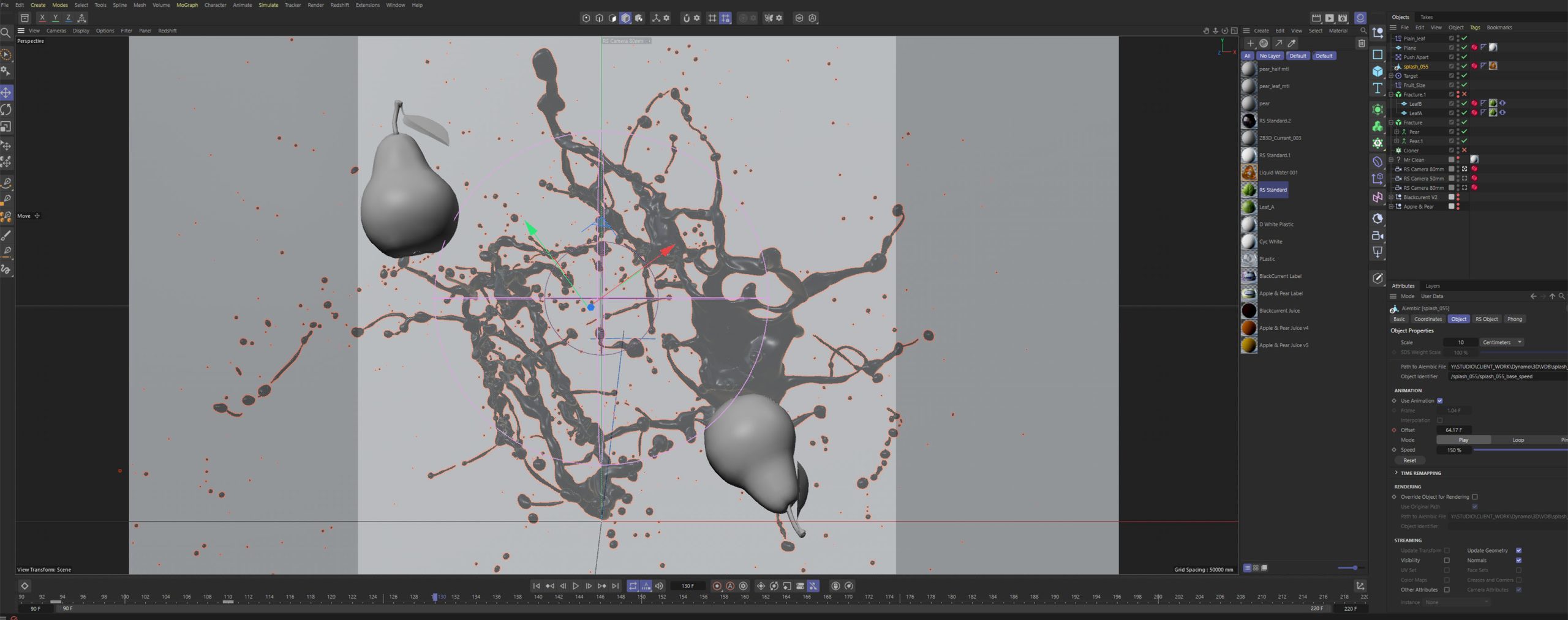
3D was brought in to add depth and movement that 2D simply couldn’t provide, while still needing to feel at home in the Miwadi world. I tested different rendering approaches — experimenting with frame rates and applying effects in After Effects to match the stop-motion style. Several 3D elements were animated on a loop and later time-remapped in After Effects, a technique that naturally introduced jitter and helped sell the stop-motion feel. It also reduced rendering time considerably, leaving more room for experimentation and iteration.
The water was an exception — it was fully rendered in 3D at a standard 30fps. Applying stop-motion jitter to the water proved too visually jarring and pulled focus away from the drink itself, so it was kept fluid and clean.
Similar techniques were applied across the Lunch and Study themes, where subtle wobbles and stutters added to the overall characterisation — building a sense of excitement and energy.
Composition and editing
Bringing all the individual elements together in line with the art direction was the central focus in the final stage of production. Colour was a key consideration throughout — certain renders came back with blown-out highlights or incorrect hue and saturation. Lumetri Colour in After Effects gave me the granular control needed to bring everything in line with the original storyboards.
Shadows were built entirely in After Effects for precise control, with layered effects and techniques used to give them depth and rich colour.
Timing and pacing were equally important. Breaking each video into three clear sections meant I could treat the rhythm of each piece deliberately — building anticipation, holding on key moments like the hero shot, and giving each section enough breathing room to land. The ability to time-remap looping 3D sequences gave me editorial flexibility without going back to re-render, which proved invaluable in the final push.